
Podcast: Play in new window | Download (Duration: 21:30 — 17.2MB) | Embed
Subscribe: Apple Podcasts | Spotify | Email | RSS | More
Mid-series check-in: Scheduled episode is late. A middle-seat run-in with two health apps. Who are we: uncle, nibling, or friend? Who logs menstruation?
Click here to view the verbatim transcript
Click here to read the newsletter
Summary
Contents
Episode
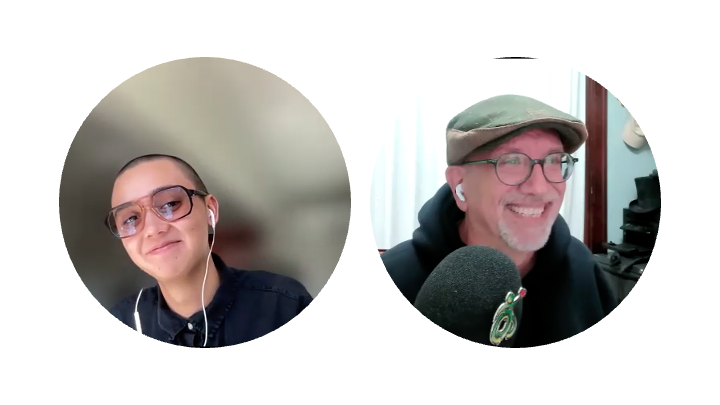
Health Hats: Hi, Phee.
Phee Marcial: Hi, Danny.
Health Hats: It’s so good to be with you again.
Phee Marcial: Yeah.
Health Hats: We said, we told people that we would be publishing this interview with Ariel, and we’re not ready.
Phee Marcial: No, not yet.
Health Hats: I didn’t want people to feel like, we weren’t good for our word. But at least for me, I felt like I don’t know, I just couldn’t be in a rush. And I wanted to do a good job. The conversation was fabulous, and we listened to it, and oh my God, it was so exciting.
Phee Marcial: Yeah, lots of material to work with, and lots of Yeah, it was tough to cut down,
Health Hats: What was, what’s been interesting in this process of working with you is, so we had this 55-minute recording. And my normal procedure would be to listen to it and ask, ” What can I trim? And then, make the audio the most. And then, there are one or two video podcasts. And then are there those one- or two-minute clips? And what I really like is I could just send the transcript to you, and I didn’t have to think about it. And that was really that was good for me.
Phee Marcial: Totally. Thank you for that. Yeah. It’s definitely an interesting, different kind of project to co-produce something that’s a conversation between the two of us versus an interview with a third person. I think it’ll be interesting when it’s our episode with you, me, and my mom. Really? Where we all know each other, but in different contexts, right?
Health Hats: Yes.
Phee Marcial: Yeah. It’s super interesting. It’s a fun way to stretch my creative muscles. Co-authorship and production are a really big part of my life since I met my current partner, Annyston. We met, like, writing together on online forums. And that was how we knew each other, basically entirely, before we met in person. So we still write together now. But it’s interesting how our, like, personal relationship has come after the creative relationship.
So, it is definitely a mode that I think helps me a lot, yeah, learn about my own creativity and how I can think differently about the work that I do. And also, I think it’s a really good way to engage with other people very closely while maintaining a kind of healthy personal distance, if that makes sense.
Health Hats: Yeah.
Phee Marcial: Yeah. I think it’s been awesome. It has allowed me, especially with you, Danny, to be, like, much more at peace with my illness. I think talking to people about it more is not always better, but talking to people, specific people intentionally, can be really helpful. And yeah, like many other people, I think my orientation towards chronic illness has historically very much been, like, this is something that I deal with on my own or with people very close to me or with healthcare providers. And so, expanding that network has been as much of a learning process as the diagnosis. Yeah.
Health Hats: Yeah. So, dear listeners, we also had a recorded conversation with Océane Pittet. I think that’s how we say her name, who is a person with endometriosis in Switzerland and a researcher. I felt like that was a whole different experience talking to her. So, you can all anticipate another, another interesting episode that’s recorded but not even touched yet for production.
Phee Marcial: Yeah. It’s exciting though.
Health Hats: It is. It is. It’s, yeah.
Twelve Leads and a Nibling
Health Hats: I’m a nurse, and one of my favorite images is an EKG, like an electrocardiogram. Because I feel if you have a room with many different windows into it, and you see one thing, and it looks different. It’s like the elephant story. But an EKG is, you have 12 leads that are looking at the heart electrical activity. And so, I feel like what we’ve been doing is looking at this animal of endometriosis from many different perspectives, which is, which you and I have varying levels of comfort with. I think it’s interesting to look at it from these many…
I wanted to ask you a personal question, if you don’t mind. Please. And we don’t have… so maybe it was in the interview with Oceane that you said I was like your uncle.
Phee Marcial: Yeah.
Health Hats: I didn’t know what that made you to me.
Phee Marcial: Yeah, I guess whatever you want me to be to you.
Health Hats: No. So, I was thinking if you have an uncle, well- … you have a niece or a nephew.
Phee Marcial: Oh, yeah.
Health Hats: And I don’t, I didn’t know how to think about that.
Phee Marcial: Yeah, I think either is fine. Even both. Oh, there you go … I know some people, I know some people who say the word nibling.
Health Hats: Niblings?
Phee Marcial: Yes.
Health Hats: Seriously?
Phee Marcial: Yes.
Health Hats: And what’s that a contraction of?
Phee Marcial: It sounds, I think, like it’s supposed to be the N from niece or nephew with the word sibling.
Health Hats: Oh,
Phee Marcial: okay. So it’s like nibling. But it sounds a little bit derogatory to me. I don’t know that I
Health Hats: love it. yes. It sounds small.
Phee Marcial: It sounds a little odd.
Health Hats: Small or oral.
Phee Marcial: Exactly. It’s like- … eating my niece or nephew, yeah.
Health Hats: Yeah.
Phee Marcial: That’s really funny. I don’t know. Anyway, but yeah I’m good with any of that. Okay. I’m also good with just Phee. Yeah.
Health Hats: Yeah. Yeah.
Phee Marcial: That’s totally fine.
Health Hats: I feel like we’re getting to be friends.
Phee Marcial: Yeah.
Health Hats: Totally … that’s what I think.
Phee Marcial: Yeah. That’s awesome. I think it was cool to be able to talk to Oceane, but I also felt like I didn’t have a super quick and easy way to describe my relationship to you- yes… with our, my relationship to my mom. I feel like uncle is just a really easy this is somebody who’s very close to my parent-
Health Hats: Yes …
Phee Marcial: who I know through that relationship- yes… but I’m also close to separately. Yes. So that, yeah. Okay. That was cool.
Health Hats: Yeah, that was I was honored. Absolutely
Phee Marcial: Honored. Oh, yeah.
Health Hats: Oh, yeah. So thank you.
Phee Marcial: Of course, Danny. Yeah.
I think also for me, regardless of how it is for you, I really appreciated the openness and the closeness that you’ve provided for me in trying to learn more about what I have going on and a different set of perspectives around chronic illness. It’s one thing to tell myself that I want to be more open, that I want to share more, and I want to hear about other people’s experiences more, and I want to change my perspective, and another thing entirely, as you say, to be, like, doing these interviews from this very, you know, intentional perspective, from this patient advocacy perspective, and working with the extremely multifaceted nature of the disease itself- at the same time. Cause as I have a tendency to try to, like my mom, I try to make… I want things to make sense; I want there to be, like, some nice cut-and-dried boundaries, especially when it comes to my health, because I want answers like everybody else does. But at the same time, my life as an artist is very different, and my creative work is much more like what we do together. I think that’s really cool.
They Can Smell It On You
Phee Marcial: I did wanna ask you also how you’re feeling about the past couple of episodes, and how your understanding of or relationship to endometriosis or women’s health maybe more in general has changed so far.
Health Hats: That’s a really good question. I’ll answer it in a couple of ways. One is that I made a last-minute change to my flight home the other day because I wasn’t feeling well, and I could only get a middle seat. And to my left was a woman who was an attorney, and she was talking about what she did, and she is an attorney for people who are creating apps. And so, she was talking about Ovia, an app called Ovia, which is a real-time recording of the menstrual experience. And I thought, okay, that was like, I hadn’t said anything about endometriosis. I had just said that I had… I had been in this, the Camden Coalition’s conference, and that I… maybe a little bit about the Trust My Own.health, and so she started talking about that. And on the other side, the person jumped in with an app that they use and showed me, which I can’t remember the name of. I re- down… I tried to find it just before we got on the call, but I couldn’t find it.
[Inserted post production]Health Hats: I found the app. It’s How We Feel. Find more info about How We Feel and Ovia in the show notes
Health Hats: But it was a mood recorder. Oh. It sorta kept drilling down. It had this overall how you feeling today with these different categories and different colors, and then it would spin off of what… how you replied with a few more op- o- opportunities to observe yourself. And then it produced this changing image of these colored balls in different sizes and different positions, and I just thought it was, again, so much with chronic illness is the, the spiritual mental health portion, and I got sick. I’m coming home early, and I’m, like, getting these- yeah, two different, people wanting to talk about their apps that are directly related to this. That was- and so I felt okay; now I’m way more responsive, or I must exude something.
Phee Marcial: Yeah.
Health Hats: Where people wanna tell me about this. …
Phee Marcial: Yeah, they could smell it on you.
Health Hats: That’s what it felt like.
Phee Marcial: That’s great.
How Could I Have Known So Little?
Health Hats: I’m also pissed off. It’s just-
Phee Marcial: Yeah …
Health Hats: Like, how could I have known so little about this?
Phee Marcial: Yeah.
Health Hats: I’m not a big person for regrets. Stuff happens when they happen- yeah… and you’re ready for it and whatever, but it just seems criminal. And- Yeah. I’m going next week to the PCORI annual meeting. And I’m definitely gonna talk to the, the women’s health folk.
Phee Marcial: Yeah.
Health Hats: Just see what else I’m missing.
Passing It Down
Phee Marcial: Yeah. Yeah, there is so much. It’s really interesting ’cause the, yeah, the, the anger and frustration, I think, doesn’t really go away for people. Yeah … I’ve been learning this more. Not that I expected it to necessarily, but I think, when we- Are so motivated towards the idea of a diagnosis or motivated towards the idea of, treatment rather than maintenance. There is this expectation that things will work out or that you want more than anything for things to work out regardless of what your emotional reaction would be to things working out. And there are a lot of people that I’ve met. When you were talking, I was thinking specifically of people who successfully had children after treating endometriosis in some way. And I think being able to make that decision is really important. But the individual’s feelings about the entire process of getting pregnant, having the child, raising the child, potentially, like what comes up a lot actually is the, the mother passing down endometriosis to the, the daughter.
Health Hats: Is it like that?
Phee Marcial: Yeah.
Health Hats: Does that mean it’s genetic? Does that mean it’s environmental and… what does that mean?
Phee Marcial: There’s both. Both.
Health Hats: Oh my goodness.
Phee Marcial: Yeah. Having, yeah, like a mother or aunt or grandmother with endometriosis does increase your risk. But it’s unclear. We don’t really know. I hoped that Oceane would say a little bit more, but she- I don’t know if you noticed- she dropped it in there, but left it for us- yeah… to talk about later.
Health Hats: I didn’t pick up on that …
Phee Marcial: It’s a lot. It’s, there’s a lot.
Health Hats: I’m looking forward to listening to it again and seeing what you’re saying.
Not Any Kind of Guy
Health Hats: I got a text from a longtime Health Hats follower. And she was like, saying, “Oh, I love that you’re doing this series,” and a little bit about her experience, and she said, “What kind of guy gets into this?” And then at the end she wrote I guess you’re not what kind of a guy.” Or something like that. Anyway, so that was nice to hear from her.
Phee Marcial: Yeah that’s really cool. I’ve- Yeah … noticed since my, since we’ve started on this series, my dad started checking in with me. I don’t know if it’s related specifically to the series or if he just- … has been doing it for fun, but he-
Health Hats: He’s a new subscriber.
Phee Marcial: Oh, is he? Yeah. Okay, maybe it is because of that. But he’s recently been asking me, like, how my kind of daily pain level is. He’ll check in with me. About once a day, and it’s nice. It’s like it’s also interesting ’cause my relationship with him has not been quite so direct before. I appreciate it a lot. I, it’s a little weird, but not in a bad way.
Health Hats: Yeah.
Phee Marcial: And I think that men learning more about women’s health or just, like, anything about gynecologic conditions- these things affect men too, right? Both emotionally and literally, right? I think that is huge and a much larger piece of this puzzle than people typically think about first. Because there are many people in this space who have felt that the only way to move forward is to keep things between women and, by m- in, in secrecy, it is safer. And I think that’s fair. I think that’s absolutely real.
Health Hats: Totally …
Phee Marcial: I also think that it, in, in certain ways is worse. Not always, but it makes it difficult-
Health Hats: Wait a minute. What’s worse? I didn’t get the worse part
Phee Marcial: It can be worse or better depending on the situation, to protect it or not. Okay. I was thinking about that too with your flight mate.
Is There No Low?
Phee Marcial: Apps for women’s health in general, that data is not secure. So that lawyer must have a very interesting job because… I don’t know. She’s learned about…
Health Hats: I didn’t think about that.
Phee Marcial: Yeah … a lot of the, there’s been many incidences of cycle tracker apps, like period tracker apps being, their, the data being used for prosecution of abortions. Yeah.
Health Hats: Is there no low we can’t stoop to?
Phee Marcial: Exactly. That is a really interesting legal position to be in for that person.
Health Hats: I didn’t really consider that, when she said legal- … that might be what she meant.
Phee Marcial: It’s very possible.
Health Hats: It is. I don’t know what I was thinking. I mean, it’s likely, actually.
Phee Marcial: Yeah.
Health Hats: Ugh.
Phee Marcial: It’s rough. It’s interesting, actually. When I was in college there were maybe more people of the generation just ahead of us, like more millennials, who would use period tracker apps and stuff like that. But pretty much everybody that I know around my age and younger has avoided them.
We’re all n- no, we’re not doing that. We do not feel safe sharing that kind of information. So, it’s interesting how there’s an intersection of internet literacy, like information literacy, and women’s health there. Very interesting stuff. That actually could be something good to talk to my mom about because-
Health Hats: It would be. It would be … she’s very interested in those kinds of things, yeah.
Cut Off
Health Hats: Okay. I’m gonna cut this off.
Phee Marcial: Yeah.
Health Hats: ‘Cause we could just do another hour, and then that would defeat the purpose- exactly. … too short. And I don’t wanna edit.
Phee Marcial: No, this is great.
Yeah.
Health Hats: Okay.
Phee Marcial: Thanks
References
Phee Marcial’s website: https://hvmator.com/home
How We Feel, a free app from the Yale Center for Emotional Intelligence. A free journal for your well-being created by scientists, designers, engineers, and psychologists. Over time, you will learn precise words to describe how you feel, spot trends and patterns, and practice simple strategies to regulate your emotions in healthy ways.
Endometriosis Foundation of America talk by Krina Zondervan (Oxford), 2025. https://www.endofound.org/the-familial-and-hereditary-aspects-of-endometriosis-krina-zondervan-msc-dphil-frcog . Zondervan is a leading endometriosis geneticist. She explains that family, genealogy, and twin studies in Australia and Sweden all show the condition runs in families, and that about 50% of risk is genetic. The conference was titled “Your Mother Should Know, Your Doctor Should Know Better!”
Inspired by and Grateful to:
Laura and Fred Marcial, Chandra Spring-Robinson, MD, Alyssa Yee, MD, Ariel Gallop
Related Episodes
The Gods Fight: Intro to Endometriosis Series w Phee Marcial
Please comment and ask questions:
- at the comment section at the bottom of the show notes
- on LinkedIn
- via email
- YouTube channel
- DM on Instagram, TikTok to @healthhats
- Substack
- Patreon
Production Team
- Kayla Nelson: Web and Social Media Coach, Dissemination, Help Desk
- Steve Heatherington: Help Desk and podcast production counseling
- Joey van Leeuwen, Drummer, Composer, and Arranger, provided the music for the intro, outro, proem, and reflection
- Claude, Perplexity, Auphonic, Descript, Grammarly, DaVinci Resolve, DaVinci AI Art Generator, OpenArt AI Creator Studio
Artificial Intelligence in Podcast Production
Health Hats, the Podcast, utilizes AI tools for production tasks such as editing, transcription, and content suggestions. While AI assists with various aspects, including image creation, most AI suggestions are modified. All creative decisions remain my own, with AI sources referenced as usual. Questions are welcome.
Creative Commons Licensing
 This license enables reusers to distribute, remix, adapt, and build upon the material in any medium or format for noncommercial purposes only, and only so long as attribution is given to the creator. If you remix, adapt, or build upon the material, you must license the modified material under identical terms. CC BY-NC-SA includes the following elements:
BY: credit must be given to the creator. NC: Only noncommercial uses of the work are permitted.
SA: Adaptations must be shared under the same terms.
Please let me know. dannyhealthhats@gmail.com Material on this site created by others is theirs, and use follows their guidelines.
Disclaimer
The views and opinions presented in this podcast and publication are solely my responsibility and do not necessarily represent the views of the Patient-Centered Outcomes Research Institute® (PCORI®), its Board of Governors, or Methodology Committee. Danny van Leeuwen (Health Hats)
