
Podcast: Play in new window | Download (Duration: 14:58 — 12.0MB) | Embed
Subscribe: Apple Podcasts | Spotify | Email | RSS | More
From a 10-bed lying-in hospital to Handel’s Messiah, the Rotunda Maternity Hospital has operated continuously for 281 years. A Nurses’ Week story.
Summary
Across the street from Danny’s Dublin hotel stood a large white institutional building with no signage. It turned out to be the Rotunda Hospital — the oldest continuously operating maternity hospital in the world, delivering babies in the same building since December 8th, 1757. Surgeon Bartholomew Mosse founded it after losing his wife and child in childbirth, trained as a midwife in Paris at a time when physicians were penalized for practicing midwifery, and returned to Dublin determined to build something that didn’t yet exist.
The first version had 10 beds and delivered 190 babies in its first year, with one maternal death. Unable to raise money for a larger hospital — no one wanted to fund poor women’s care — Mosse attended the world premiere of Handel’s Messiah in Dublin in 1742 and was inspired. He turned the future hospital site into a pleasure garden with orchestras, dances, and theater to attract wealthy donors. He was later imprisoned for debt, escaped through a castle window in Wales, hid in the mountains for three weeks, and died exhausted and broke in 1759, less than two years after the new hospital opened.
Sara E. Hampson, one of Florence Nightingale’s original nurses, became the hospital’s first female superintendent in 1891 — a thread that ties Nurses Week directly to this building, Danny almost walked past.
Click here to view the printable newsletter. More readable than a transcript.
Contents
Podcast episode on YouTube
Episode
Proem: No Signage, No Appointment, No Problem
Hello. Welcome to 2026 Nurses Week, May 6th through 12th. I’m very proud to be a nurse. I’ve been a nurse for 50 years. And my grandson’s going to nursing school next year. He’s graduating as a senior and will attend Loyola University in Chicago for its nursing program. I’m very proud.
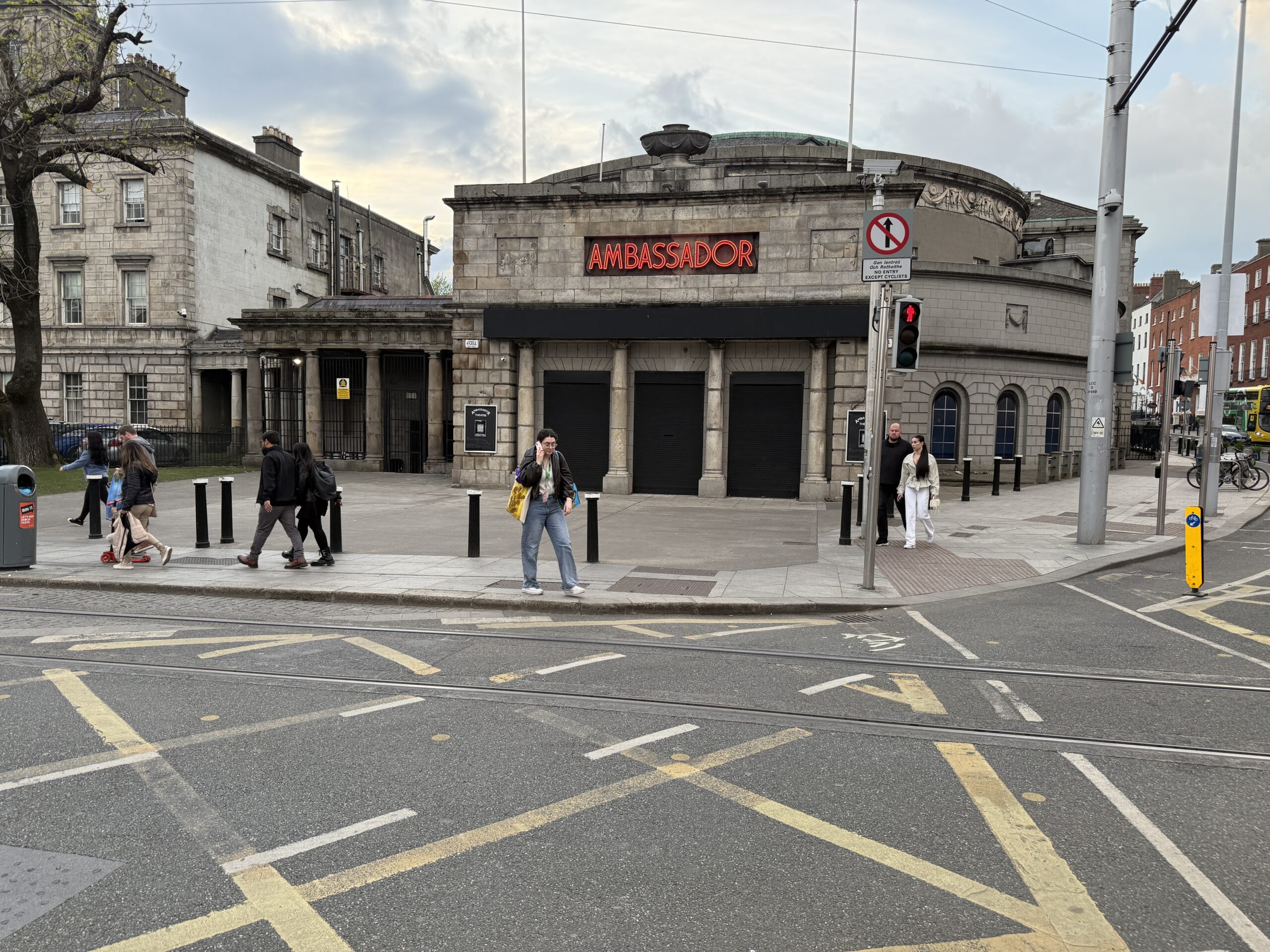
I want to tell you a story about one of the most significant things that happened during our trip to Ireland a couple of weeks ago. We were staying in the north-central city of Dublin, Ireland. Across the street, I saw a big white institutional facade with no signage. It looked like the side of the building. Next to it, on its right, was a dome with a more modern sign that read “Ambassador”. So, I went into the hotel and asked, “So what’s this building?” And they didn’t know.
I looked it up, and it turned out to be the Rotunda Hospital. The Rotunda Hospital is the oldest freestanding maternity hospital in the world.
Midwifery Was Scandalous. He Did It Anyway.
Now let me see. I’ve got some notes here. The hospital was founded in 1745 by a man named Bartholomew Mosse, M-O-S-S-E. He was a certified surgeon. His wife and child died in childbirth. After this tragedy, he left Ireland to serve as a doctor with the British Army. While he was away, he received midwifery training at a hospital in Paris and obtained his midwifery license, which was unusual. In fact, fellows of the Royal College of Physicians were even penalized if they practiced midwifery.
But Mosse wanted to change that. So, he built this small place, 10 beds, that… Let’s see, when did it open? I guess it opened in 1745. Mosse’s ambition was to build a dedicated maternity hospital in Dublin to provide medical care and shelter to the city’s penniless mothers. This came after he encountered unspeakable conditions during his practice, particularly in the aftermath of the 1739 famine.
So he established this 10-bed hospital. It was in a small theater called the New Booth Theatre. It says here that it was the first lying-in hospital of its kind in the world. It had only 10 beds, but in its first year, 190 babies were born, and just one mother died. But obviously, they couldn’t meet demand with 10 beds.
When No One Funds Poor Mothers, Try Dancing
Mosse tried to raise money to build a larger hospital, but nobody really wanted to give money to poor women. So he happened to attend the world premiere of Handel’s Messiah on April 13, 1742. While he was there, he was inspired to raise money by entertaining the wealthy.
Somebody sent me a picture of the Handel statue that’s in front of the theater where the premiere was, which I thought would be interesting.
According to my research, on the evening of April 13th, 1742, Handel conducted the world premiere of his Messiah on Dublin’s Fishamble Street, and Mosse was present. Historians suggest that this moment crystallized Mosse’s idea of using high-society entertainment to fund a hospital for the poor.
So Mosse turned the proposed hospital site into a pleasure garden with a live orchestra, theatrical performances, and dances in a coffee house, marrying philanthropy with frivolity to reach the wealthy.
Debt, Daring Escape, Death
Here’s a little interesting tidbit. Lotteries nearly destroyed Dr. Mosse. Before he was able to return to Ireland, he was arrested and charged with being 200 pounds in debt, and he’s thought to have been imprisoned in Beaumaris Castle in Anglesey, Wales. The story was that he managed to escape through a window and hid in the Welsh mountains for three weeks before reaching Ireland. He then vindicated himself by publishing his receipts and lottery accounts, whatever. But less than a year after the hospital opened, he was taken seriously ill, exhausted, heavily in debt, and petrified about the prospect of arrest and imprisonment. He died on February 16th, 1759.
Fix the Air, Save the Babies. Then and Now.
Around 1781, when the hospital was poorly ventilated and every sixth child died within nine days of birth, they realized the problem was poor ventilation. Ventilation was improved, and mortality dropped to 1 in 20 over the following five years.
They’re also planning to celebrate their millionth birth in 2026. It’s just amazing. I met a saleswoman in a sweater store who asked where we went in Dublin. When I told her about the Rotunda Hospital, she said she had a difficult pregnancy and birth without insurance. She received care at the Rotunda Hospital, with her baby in neonatal intensive care for three weeks and herself as an inpatient for two weeks. Awesome care!
So, when we were there, I, an old white guy in a wheelchair, motored into the Rotunda Hospital and stopped at the registration desk to ask if I could speak with someone. I had not made an appointment. I was leaving the next day. Very nice people. I tried to get hold of people in their library, research, and marketing, but they were busy, of course.
Oldest? It’s Relative.
I’m really impressed by the idea of being the world’s longest-operating specialist hospital. I was trying to get some perspective on that, so I looked up the oldest continuously operating hospitals, and here’s what I learned. I learned that in the United States, the oldest continuously operating hospital is Bellevue Hospital in New York City, which opened in 1736 as a six-bed infirmary.[1]
So, it began as a haven for the indigent and is still a major public hospital on the East Side of Manhattan. It opened nine years before Mosse opened his first lying-in hospital. The other long-running hospital is the Pennsylvania Hospital in Philadelphia[2], established in 1751 by Benjamin Franklin and Dr. Thomas Bond. It’s still operational as part of the University of Pennsylvania Health System. The oldest hospital is the Hôtel-Dieu in Paris[3], which officially opened in 650 AD, and that’s the hospital where Mosse became a midwife. There’s St. Bartholomew’s Hospital in London, founded in 1123[4]. And there’s the Hospital de Jesús Nazareno in Mexico City, opened in 1524. But really, the Rotunda is the oldest maternity-only specialist hospital, continuously operating in the world, which is a more specific and arguably more impressive claim than the general acute care hospitals Bellevue and Hôtel-Dieu, which have both moved buildings, changed missions, and been rebuilt.
The Rotunda has been delivering babies in the same building since December 8th, 1757. That’s really something.
Reflection: Nightingale Was Here Too
So, let’s bring this back to Nurses Day and to Florence Nightingale. Interestingly, Sara E. Hampson was one of the original Nightingale nurses and the first lady superintendent of the Rotunda Hospital in 1891.
So yay, nursing. Yay, history. I’m really looking forward to exploring more of this amazing hospital in Dublin.
I wonder who was in charge all these years, and how it survived past Mosse and through those first decade or first few years? And then, how did the Rotunda Hospital survive war, famine, pandemics, and technological change? What research occurred there? Is there a diaspora of Rotunda alumni?
Anyway, more to come. Thanks.
Referenced in episode
[1] By Harper’s Weekly – Harper’s Weekly, Public Domain, https://commons.wikimedia.org/w/index.php?curid=6014479
[2] William Strickland (1788-1854) Engraver: Samuel Seymour (1796-1823), Public domain, via Wikimedia Commons
[3] I, Clio, CC BY-SA 3.0 <http://creativecommons.org/licenses/by-sa/3.0/>, via Wikimedia Commons
[4] See page for author, CC BY 4.0 <https://creativecommons.org/licenses/by/4.0>, via Wikimedia Commons
Are you part of the Rotunda Hospital diaspora? Find me at dannyhealthhats@gmail.com. Tell me your version.
Please comment and ask questions:
- at the comment section at the bottom of the show notes
- on LinkedIn
- via email
- YouTube channel
- DM on Instagram, TikTok to @healthhats
- Substack
- Patreon
Production Team
- Kayla Nelson: Web and Social Media Coach, Dissemination, Help Desk
- Leon van Leeuwen: editing and site management
- Oscar van Leeuwen: video editing
- Julia Higgins: Digit marketing therapy
- Steve Heatherington: Help Desk and podcast production counseling
- Joey van Leeuwen, Drummer, Composer, and Arranger, provided the music for the intro, outro, proem, and reflection
- Claude, Perplexity, Auphonic, Descript, Grammarly, DaVinci
Inspired by and Grateful to: Dr. Lisa Masinter and Dr. Michele Whitt, Janice Tufte, Linda DeRosa, Luc Pelletier, Cherie Binns
Photo Credits
Ann Boland, Paul Boland, Janice Tufte, Danny van Leeuwen, and as referenced in the transcript
Related episodes from Health Hats
Systemic Disparities & Inequities in Maternal Health. Still?
Artificial Intelligence in Podcast Production
Health Hats, the Podcast, utilizes AI tools for production tasks such as editing, transcription, and content suggestions. While AI assists with various aspects, including image creation, most AI suggestions are modified. All creative decisions remain my own, with AI sources referenced as usual. Questions are welcome.
Creative Commons Licensing
 This license enables reusers to distribute, remix, adapt, and build upon the material in any medium or format for noncommercial purposes only, and only so long as attribution is given to the creator. If you remix, adapt, or build upon the material, you must license the modified material under identical terms. CC BY-NC-SA includes the following elements:
BY: credit must be given to the creator. NC: Only noncommercial uses of the work are permitted.
SA: Adaptations must be shared under the same terms.
Please let me know. dannyhealthhats@gmail.com Material on this site created by others is theirs, and use follows their guidelines.
Disclaimer
The views and opinions presented in this podcast and publication are solely my responsibility and do not necessarily represent the views of the Patient-Centered Outcomes Research Institute® (PCORI®), its Board of Governors, or Methodology Committee. Danny van Leeuwen (Health Hats)
