
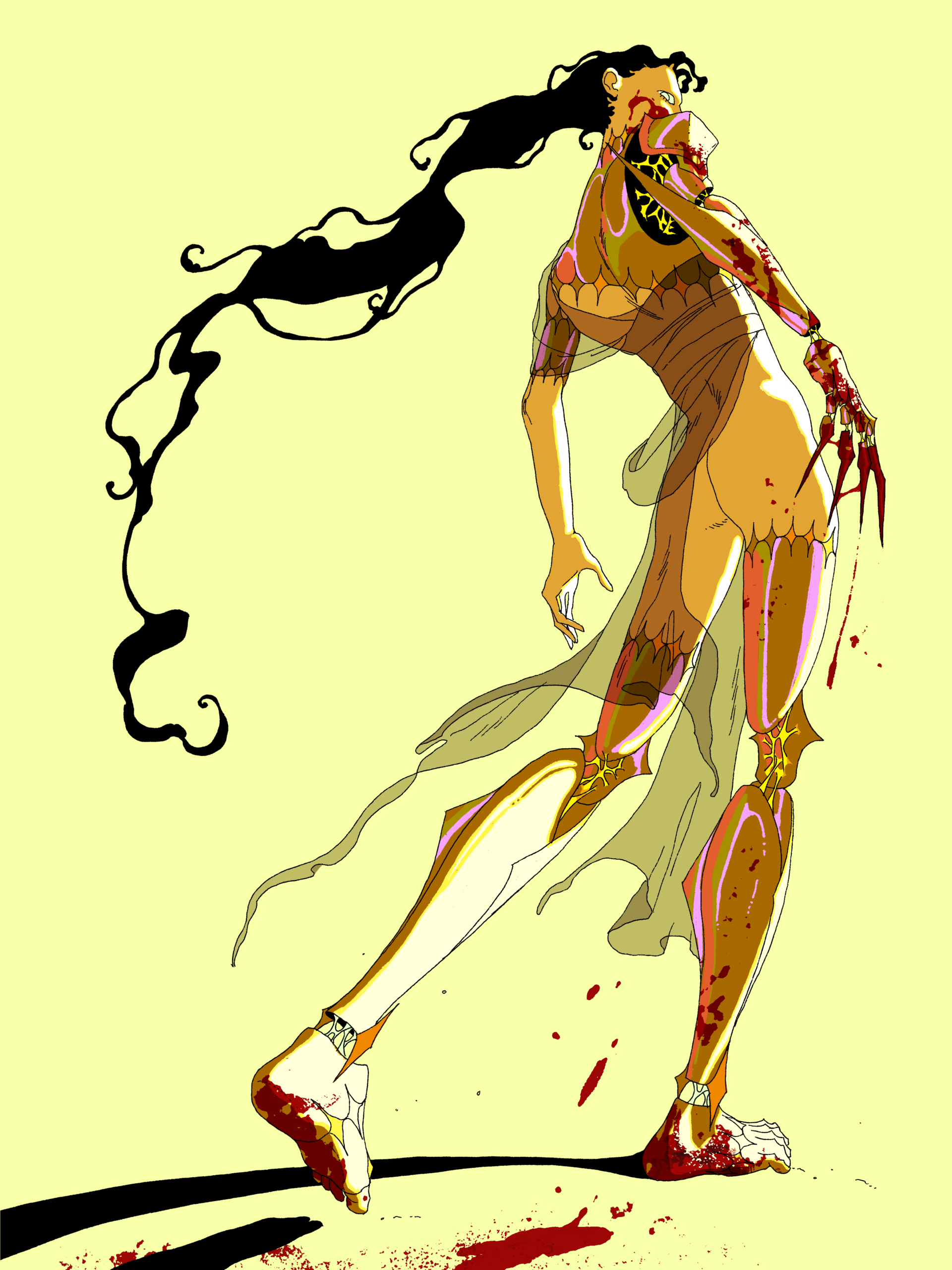
Podcast: Play in new window | Download (Duration: 21:47 — 17.5MB) | Embed
Subscribe: Apple Podcasts | Spotify | Email | RSS | More
Danny and Phee open their endometriosis series: how they met, Phee’s decade-long journey to diagnosis, and what this disease actually does to the body.
Click here to view the verbatim transcript
Click here to read the newsletter
Summary
Danny and Phee Marcial launch their co-produced series on endometriosis by telling the story behind it: Phee’s mom, Danny’s old friend, introduced them after years of talking about hard-to-diagnose conditions in her own family. Phee walks through growing up with unexplained GI and menstrual symptoms that got waved off as IBS, the gender-identity reasons they resisted the diagnosis even when a partner suggested it, and the pelvic floor therapist (Ariel Gallop) whose phone consultation finally pointed them toward surgery. Along the way, Phee describes what endometriosis physically is — tissue growing where it shouldn’t, “a literal web” binding their organs together — and what it’s like to live in a body that seems to work against itself. Danny closes by naming his own blind spots as a white, cisgender man producing this series, and previews Episode 2: a conversation with Ariel Gallop herself.
Contents
Episode
Proem: Know Enough to be Dangerous
Health Hats: Welcome to a new Health Hats series, co-produced with Phee Marcial, about endometriosis. Why endometriosis and why co-produced? I’m curious about common diseases such as multiple sclerosis, which are difficult to diagnose without fully understanding their causes and really mess with quality of life. I know enough about endometriosis to be dangerous.
Here’s my interpretation of what I’ve read. Endometriosis causes chronic pain and makes it harder to get pregnant. It’s not cancer, but it’s very common. Endometriosis is estimated to affect at least 6.5 million people in the United States—about 11 percent of women ages 15 to 44—though the true burden is difficult to measure because diagnosis is often delayed and some people remain undiagnosed. The federal Office on Women’s Health uses the “more than 6½ million” and “at least 11 percent” estimates.[i] By comparison, nearly 1 million people in the United States are living with a diagnosis of multiple sclerosis (MS), according to a 2019 prevalence study funded by the National MS Society.[ii] Doctors still debate endometriosis because no one fully understands what causes it or how it behaves in the body. Recent research points to a mix of factors: genetics, hormones, inflammation, and immune system quirks.
Why co-production? As a master networker and rabid mentor, I consider co-production my superpower. Co-production is more than an interview or a guest appearance. Phee and I will partner to create these episodes—bringing our different experiences, deciding together what matters, shaping the conversation, and sharing responsibility for the result. Sometimes that will look like a mentor–mentee conversation; in later episodes, it will include more joint planning and creative decision-making.[iii]
Introducing Phee Marcial
Health Hats: Phee, hi. I’m so glad we’re doing this together.
Phee Marcial: Me too …
Health Hats: I love the idea of co-production, and it’s time I put my money where my mouth is. Thank you for the opportunity to co-produce a series together. Why don’t I spend a couple of minutes and share with our audience how I got to this point of meeting you, having these conversations, and learning more about each other’s experiences and skills. Feel free to interrupt me at any time with any comments or questions.
Meeting Each Other
People may or may not know that I met you through your mom, Laura. We’ve been friends for a long time, pre-COVID, for many years. We’ve worked together in many ways. It’s not important how. We’ve grown from colleagues to buddies. We’re very interested in each other’s families and our family experiences. Your mom was the first person to introduce me to endometriosis. We had been having a conversation about conditions that are hard to pinpoint, diagnose, and understand, that aren’t clear-cut. And maybe it started with the challenges I had getting diagnosed with MS, but it was more than just MS. Laura started talking about endometriosis, and at that time I had no idea this was a family story she was talking about.
She opened my eyes, and I became really interested. Another reason I was interested is that I feel like healthcare and people managing their health are a family affair. It’s a community affair.
Phee Marcial: Always
Health Hats: People have families; some don’t, but still, it isn’t just the person who has the label. Everyone who touches it has a role. When I listened to your mom talk and educate me, you know, she would send me clips of this or that as we do, and then she suggested you and I meet.
Phee Marcial: Nice. She pretty much did the same thing with me. Obviously, I’ve heard about you, Danny, for a long time. Yeah, I kind of grew up hearing your name around the house and sometimes hearing your voice through computer speakers. And yeah, I think I really struggled with no diagnosis and no clear idea of how to move in my very clearly chronically ill, but unnamed, body.
I had no idea how to talk about it with people, and no idea how to seek the support I needed, let alone offer support to others. So yeah, when my mom suggested we connect, it was almost a year after my first endometriosis excision surgery. The actual anniversary of that will be tomorrow. So that’s cool.
Health Hats: Wow. Mazel tov.
Written Off
Phee Marcial: Thank you. That gave me time to sit with what I was going through, learn more about it, and process the trauma of needing surgery, undergoing it, and recovering from it. I think this project came at a really good time for me and, I think, at a really important time for endometriosis generally.
Yeah. Maybe even the whole spectrum of chronic autoimmune disorders. But yeah, the road was not an easy one, and it doesn’t really look like it’s getting easier any time soon. But it is interesting, and I’ve found it’s definitely worth sharing my story because everybody’s story is different, and yet we are always able to find something in somebody else’s story that connects to us and resonates with us.
I was diagnosed with endometriosis last year at the age of 23. I had lived my entire life up to that point with all the hallmark symptoms of endo, including menstrual and gynecologic symptoms, as well as other symptoms I didn’t know were related, mostly gastrointestinal and bowel symptoms. Like many other people with this condition, I often had these symptoms written off as a sensitive gut, IBS, or this or that or the other.
Health Hats: What’s IBS?
Phee Marcial: Irritable bowel syndrome.[iv]
There are kinds of diagnoses, like interstitial cystitis, which is a type of chronic bladder inflammation. And yeah, I had this constellation of symptoms, including menstrual pain, heavy bleeding, bowel problems, like lots of pain with bowel movements, lots of bowel pain in general, lots of upper GI symptoms, acid reflux, chronic nausea.
And some psychological symptoms as well, which were very difficult for me to manage. Severe anxiety with somatic expression of that anxiety. Depression, suicidality, and very sensitive emotional responses to medications, particularly hormonal medications. All of this was peppered throughout my childhood.
Not Recognizing Myself
My current partner suggested that I might have endometriosis, but I didn’t really think about it. I had known people with endo before. But the disease is described with so much emphasis on gynecologic symptoms. I had a difficult time relating to those symptoms, even though I had a lot of them, because I was maybe thinking they weren’t severe enough. Maybe, in my case, it’s not actually that bad, or that dealing with gynecologic symptoms would mean having to, yeah, give up some aspect of my gender identity, which, for my entire pubescence, was still developing, and I didn’t have a chance to get that kind of care in an environment that wasn’t going to automatically assume that I was a woman or that I was becoming a woman.
Pelvic Floor Therapy
As that all changed and I made it through college and started graduate school, I realized that what I had going on was completely untenable. And that the things I was doing to manage my chronic pain were just not cutting it. So I left school and spent some time in Virginia with my current partner.
When I came out to San Diego last year, I decided on a whim to reach out to this pelvic floor therapist. Her practice is five minutes from where I live, so I was like, ‘What the hell, sure.’ I’d only really heard about pelvic floor therapy in passing. I’d seen people post on Reddit about it and stuff like that. I thought, “What could it hurt?” I looked her up and called her office. I soon found out she’s a one-woman show who does everything from scratch and cares for all her patients with almost frightening tenacity. I got on the phone with her later that day for a 30-minute consultation intake call.
Is this a good fit? What do you have going on? She does this all the time, as she made clear to me during that phone call. But by the end of it, I mean, it wasn’t by the end of it. It was like five minutes in that she was telling me, “You definitely have endometriosis.” But by the end of it, I was seeing a path toward learning more about what I had going on in a meaningful direction. Not just chasing empty threads. And yeah, that was what started me down my diagnosis journey. I don’t think I would be where I am without that phone call.
Health Hats: She’s a physical therapist?
Phee Marcial: She’s a physical therapist, yes.
I had looked into various gynecologists. I’d been taking shots in the dark about who was actually a specialist and who was just a regular OB doing their best, right? And yeah, I got in. Ariel Gallop is my pelvic floor therapist. I got in, and she was like, “You need to see this person. You need to see her fast. She’s going to want to do surgery on you. Also, her wait times in her office are super long, so if you’re there for three hours waiting for an appointment, I’m sorry, but you must see her. So bring a book. Make sure you block out your schedule.” And all of those things were true.
Surgery for Endometriosis
I did need surgery. I did need to see this woman, this surgeon. I did have to wait a long time to see her. But when I did, things moved much more quickly. And yeah, that’s the kind of thing patients really need right now. I mean… people with endometriosis are on a wait list that can be a year or more long for surgery because there aren’t a lot of surgeons who do it well, and there aren’t a lot of surgeons, period. Getting insurance to pay for this was a challenge. Managing the recovery was intense. It was severe. It was not open-abdomen surgery, since it was a laparoscopic operation.[v] But it was, for-
Health Hats: They’re messing around a lot in there.
Phee Marcial: Lack of a better term.
Health Hats: Even if it’s a small incision.
Phee Marcial: Yeah. Scrambling my guts. Yeah. Because I had it everywhere. And by it, perhaps we can describe what endometriosis actually is. We don’t know much about it, so I am by no means an expert. And the experts that there are are still learning about it. But as far as we understand, it’s tissue that should be growing inside the uterus that is growing outside the uterus, in the abdominal cavity, in other organs, or, in certain cases, this is called adenomyosis[vi], an overgrowth of tissue within the uterus.
And as far as we understand, this tissue is hormonally mediated in some way and produces estrogen, and its growth is also increased by estrogen in the body. But the various ways those different hormonal substances interact with the endometrial tissue is still not completely understood.
But what it did to my body was coat my abdominal organs, mostly the small intestine, colon, and rectum, as well as the abdominal cavity, bladder, and uterus, and cause everything to hold tightly. If you imagine it like cobwebs, strong cobwebs that hold these organs together. I was constantly bloated. My abdomen felt heavy. I had extreme pain with certain kinds of movement, like cardio exercises and certain types of abdominal exercises, certainly with pooping and peeing, and certainly with any kind of sexual activity.
A Web You Can Touch
And these things are… They seem like so many different systems at once, and they are, right? But the thing connecting them is very literal. It is like a web, a literal web of tissue. It was interesting to learn that endo is something you can touch. In the body, it is excised because it’s something you can remove. It’s something that can be killed, basically. And I think many people who have experienced chronic disease struggle to reconcile the idea of the body as something that can turn on itself. Everybody struggles with this, but for me, I always felt at odds with how my body worked and like I couldn’t trust myself to work properly. And it’s complicated when it is me. In a sort of pseudo-cancerous way, it is my own body that is causing my body not to work properly, quote-unquote.
So yeah, that’s a little bit about me and a little bit about endo. Hopefully, when we have other guests on this podcast, we’ll get some more informed perspectives on how the disease works and what it is.
Reflection
Health Hats: My mind can go crazy about where this can go. I feel like, as you said, learning more about endo, learning more about the endo industrial complex, such as it is or isn’t, about family, and about the role of identity and gender identity, and the experiences of other people.
I thoroughly enjoyed creating this episode, getting to know Phee, deepening my understanding of endometriosis, and collaborating on production. I’m infuriated by how gender roles and racial bias are baked into our health system, as seen in Phee’s experience. How much does being a white, cisgender, privileged man color my understanding? I look forward to continuing the series with Phee and with you, my dear readers, listeners, and watchers.
In our next episode, we will interview Ariel Gallop, a pelvic floor physical therapist, and learn more about endometriosis and the work that Ariel does. Thanks
[i] https://womenshealth.gov/a-z-topics/endometriosis
[ii] https://www.nationalmssociety.org/about-the-society/who-we-are/research-we-fund/ms-prevalence
[iii] https://www.learningforinvolvement.org.uk/content/resource/nihr-co-production-in-action-number-one/
[iv] https://www.niddk.nih.gov/health-information/digestive-diseases/irritable-bowel-syndrome
[v] https://www.leedsth.nhs.uk/patients/resources/deep-infiltrating-endometriosis/
[vi] https://www.nhs.uk/conditions/adenomyosis/
References
Phee Marcial’s website: https://hvmator.com/home
Inspired by and Grateful to:
Laura Marcial, Chandra Spring-Robinson, MD, Alyssa Yee, MD
Related Episodes
The Gods Fight: Intro to Endometriosis Series w Phee Marcial
Please comment and ask questions:
- at the comment section at the bottom of the show notes
- on LinkedIn
- via email
- YouTube channel
- DM on Instagram, TikTok to @healthhats
- Substack
- Patreon
Production Team
- Kayla Nelson: Web and Social Media Coach, Dissemination, Help Desk
- Steve Heatherington: Help Desk and podcast production counseling
- Joey van Leeuwen, Drummer, Composer, and Arranger, provided the music for the intro, outro, proem, and reflection
- Claude, Perplexity, Auphonic, Descript, Grammarly, DaVinci Resolve, DaVinci AI Art Generator, OpenArt AI Creator Studio
Artificial Intelligence in Podcast Production
Health Hats, the Podcast, utilizes AI tools for production tasks such as editing, transcription, and content suggestions. While AI assists with various aspects, including image creation, most AI suggestions are modified. All creative decisions remain my own, with AI sources referenced as usual. Questions are welcome.
Creative Commons Licensing
 This license enables reusers to distribute, remix, adapt, and build upon the material in any medium or format for noncommercial purposes only, and only so long as attribution is given to the creator. If you remix, adapt, or build upon the material, you must license the modified material under identical terms. CC BY-NC-SA includes the following elements:
BY: credit must be given to the creator. NC: Only noncommercial uses of the work are permitted.
SA: Adaptations must be shared under the same terms.
Please let me know. dannyhealthhats@gmail.com Material on this site created by others is theirs, and use follows their guidelines.
Disclaimer
The views and opinions presented in this podcast and publication are solely my responsibility and do not necessarily represent the views of the Patient-Centered Outcomes Research Institute® (PCORI®), its Board of Governors, or Methodology Committee. Danny van Leeuwen (Health Hats)
