
Podcast: Play in new window | Download (Duration: 33:06 — 26.5MB) | Embed
Subscribe: Apple Podcasts | Spotify | Email | RSS | More
Using AI to track symptoms, weigh medication options, and advocate. Not a cure, a toolkit. An honest, careful path without handing over the wheel.
Summary
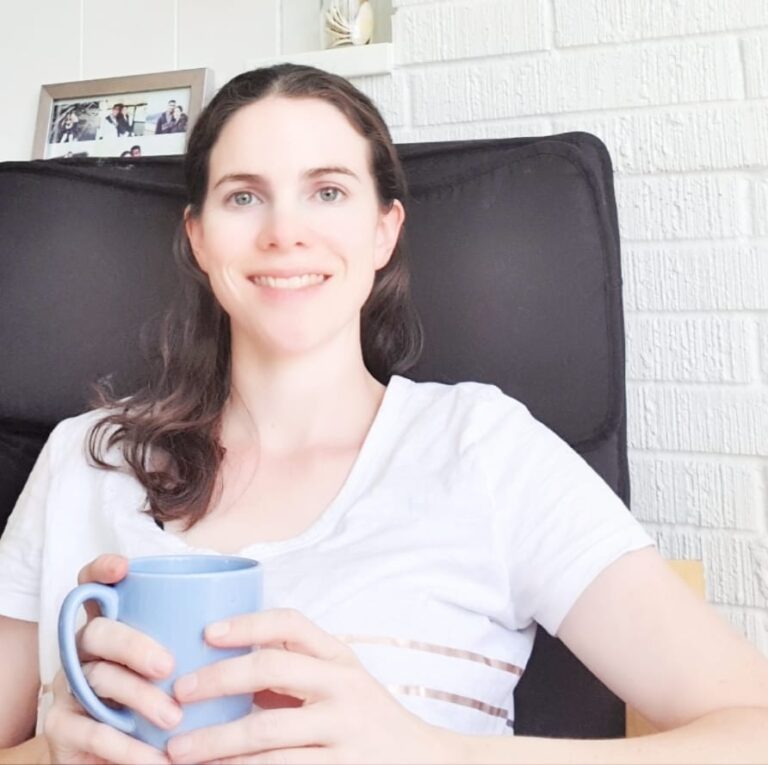
Health Hats reviewed Melissa Reynolds’ book on pregnancy in 2019, and they bonded over the fact that a man had blurbed it. Now she’s on to something new: she’s been figuring out how to use AI to manage a body that’s been hard to live in for two decades. The turning point came in a diagnostic unit, alone in the dark with no idea what would happen next. She opened Claude and asked what the odds were. The answer was enough to let her breathe.
What follows is one of the more grounded conversations you’ll hear about patients and AI. She tracks her symptoms in a spreadsheet and asks AI to surface what she’s missing, which is how she learned that her fatigue flares two days before her gut does. She brings research to her GP, who welcomes it and smiles. She nods at the gastroenterologist, who warns her off “that ChatGPT thing.” She’s careful about the politics, careful about the safeguards, and clear that this is for driving your own care, not replacing your clinicians. Her advice for anyone curious is refreshingly un-hyped: know what state you’re in, get a buddy if you’re vulnerable, and tell the tool what you actually need. She calls it a powerful toy, used well.
Click here to view the printable newsletter. More readable than a transcript.
Contents
Podcast episode on YouTube
Episode
Proem
Melissa Reynolds and I bonded when she invited me to review her book on pregnancy, fibromyalgia, and chronic fatigue syndrome in 2019. That still makes us both laugh: a man had written one of the blurbs on the back cover. I thought it was a riot. Melissa thought it made perfect sense because the people who most need to understand what a pregnant body is going through are often the ones standing next to it, trying to help but not quite getting there.
Although we follow each other and frequently comment on each other’s posts, our last real conversation was in 2020 about a yoga program she was starting. A few small things from that conversation are still part of my every-other-day stretching and balance routine.
I’m drawn to Melissa because she accepts what is, including that hard-to-live-with body, and creates and shares tools for those of us with the same or different diagnoses but similar lived experiences. All for best health.
Our friendship has grown virtually, so we can pick up where we left off. This time, I reached out to Melissa after seeing her posts about her exploration of AI.
Alone in the dark with a question
Health Hats: What lessons are you learning as you use AI?
Melissa: It’s funny to say you use AI because it’s hard not to use it now. But I’ve started exploring how AI can support me on my health journey. For a while, I was using it for bits and pieces. Then this gut issue came up. I don’t know if you’ve seen much of the journey, but I suddenly developed severe gut issues. They sent me for stool tests, which I’d never done before, and the results came back abnormally, astronomically high, so they sent me to the hospital.
Melissa: They ran all sorts of tests. They rushed me through a colonoscopy, and then I was sitting there on my own in the dark in this hospital room. It’s an ADU unit, so it’s for diagnostic purposes. It’s not a ward. There was no TV, hardly anyone around, and I was quite alone, with no idea what could happen next.
Melissa: So, I went into Claude and explained what had happened, and I said I needed to know, statistically, what was likely going on. It talked me through what it could be. That was enough for me to relax and go, okay, that’s cool.
Health Hats: Where does it stand now?
Melissa: Until a week ago, it looked very likely it was going to be one of those irritable bowel diseases. But right now, we’re completely unclear. I’ve got more specialists to see. But I realized the applications, so I started researching.
Deciding to use every tool
Melissa: Look, I’ve been sick for 20 years. I’ve been mistreated more than I’ve been well treated, and I’ve lost half my life. A lot of the doctors I saw were, meh. In the last 10 years, I’ve improved my life dramatically, but what upsets me is that I’m still nowhere near normal. That means I was very sick, and most of the doctors I saw were like, meh, even though there were concrete things to treat. They were misdiagnosing me. They were not treating me.
Melissa: So I thought I was going to use every tool I had available. I actually told Claude, “Okay, you know my history. We’ve been chatting for a while. Tell me how I can use what you can do better.”
The fatigue was signaling two days early
Melissa: I do a lot of data analysis in my part-time job, so I thought, let’s get serious about my data analysis. I moved my symptom tracking from a physical book to a spreadsheet. Then I created a prompt where I upload it once a month and say, “Here’s my data. Tell me what you’re noticing that I’m not.” It notices things I don’t.
Health Hats: Like what?
Melissa: It was the post-exertion malaise flares that I wasn’t quite understanding.
Health Hats: Post-exertion malaise. That’s the blowback from overdoing it, the hallmark of ME/CFS and other energy-limiting conditions?
Melissa: Yes. It also picked up that when I was having my gut flares, my fatigue would signal a couple of days beforehand. Every time I had a gut flare, my fatigue would worsen beforehand. So, it’s now pretty clear that whatever’s going on with my gut is systemic. It’s part of a larger situation, not just related to my gut.
Melissa: The data analysis and the research have been so helpful. I say, do some deep research, and I want you to talk to me about this topic, and it does. But you have to be very clear about what you want it to do. There’s a lot to learn about prompting. It’s very nuanced.
Smiling, nodding, and using it anyway
Health Hats: How do the clinicians you’re partnering with respond? Are they curious or suspicious? There must be a range of responses.
Melissa: It depends. My gastroenterologist keeps saying, “Oh, I hope you’re not using that,” and they always say ChatGPT when they mean AI. So I’m smiling and nodding, but obviously I was. My GP, though, is fantastic. She loves it when I bring her research. She’s engaged. If you’re comfortable with people googling, then AI is just the next step. It’s more efficient than googling.
Melissa: And I never go to her and say, “I’ve self-diagnosed myself with this.” It’s more like, “I’ve done some research.” Here’s a practical example. The gastroenterologist suggested a medication, and I don’t feel comfortable taking it. Even though they downplay the interaction with another medication I’m on, I don’t feel comfortable with the overall risk, especially when you’re playing with heart rate and blood pressure. I have low blood pressure and heart rate issues.
Melissa: The wonderful thing about AI, compared to what I can do on a hard day, is that it can pull things together. We were talking about this medicine, and it found an alternative, a lower-risk medicine that also supports this other thing. The one thing I don’t want is to end up on loads of medicines and not be sure what’s working. A doctor is surely happy to have me as an informed participant in my care, especially when chronic conditions require patient buy-in.
Where the records actually live
Health Hats: You’re in New Zealand. I always wonder how the culture and politics around medicine and these tools differ from those here, where it’s a bit of a free-for-all and the guardrails are thin.
Melissa: We’re in a very different situation. For a start, we’re a public system, but it’s crumbling. You have the people reliant on it, the people failed by it, and the few who can afford private insurance, which mostly just means you see the same people without being gatekept. We’re very segregated. Each specialty focuses on a single organ. As far as I know, we have one multidisciplinary clinic for long COVID, and it’s in the South Island, so I have no access to it, even though my ME/CFS came on after a viral illness and I’d benefit from exactly that.
Melissa: What we do have is one public record that’s stayed with me, and a recent change that allows patients to request any information an organization holds about them. That’s actually how a lot of things changed for me. I got access to my patient portal at 32, and that’s how I found out I’d been diagnosed with chronic fatigue syndrome. No one had told me. They’d just written it in there.
Health Hats: As opposed to all the times you were misdiagnosed, with both false positives and false negatives. And pulling it all together is the trick. I have a four-pound box of paper from one office, 500 pages, and 291 pages of PDF from another for three months of visits, all out of order and wildly redundant. So much of it is wrong. You start to realize that, at best, it’s grade-D information, and what I put in my journals and spreadsheets is probably the most accurate, which a doctor would never agree to.
Melissa: It’s the same here. The onus is still on the patient to gather it all and then use it. That’s a whole other thing, and it’s something I’ve always struggled with.
A very powerful toy
Health Hats: What words of wisdom do you have for people who are using these tools? Do you want to encourage them or caution them?
Melissa: First, think about what state you’re in. If you’re a bit vulnerable, don’t feel confident with technology, or are unsure about any of it, then seek guidance. Have a buddy or a mentor to do it with.
Melissa: If you’re like me, data-oriented and logical, deep research is great. But if you’re someone who needs minimal information and more would fry your nervous system, then either don’t do it, ask someone to do it for you, or tell the AI, “I don’t need lots of detail; give me the three key points I can take away.” You can always guide it. Many people use it like they’re talking to someone, which can be useful when you’re working through things. But if you can prompt it well, you’ll get what you need.
Melissa: That’s why I’m writing a series of articles. I want to guide people so they can focus on one thing, like how to use their data to get good analysis, because it’s a lot. First, you’ve got to learn how to prompt, then what to put in, then how it works. My articles are trying to make it more accessible. It’s always us, the people who are chronically ill, who are least able to jump on opportunities and make the most of them, and we’re the ones who need it most. But if you’re worried about it or opposed to it, leave it.
Health Hats: I’m not a black-and-white person; I’m more nuanced. It helps with some things but not others. One thing I’m struggling with is that it gives me too much to share, and I want to share all that depth. Maybe it’s useful for me, but not for other people. So, I’m learning to set limits. My audience has three minutes or 500 words. Then I can ask more questions. It’s amazing. It’s a toy, in a way. A very powerful toy.
Melissa: Thank you so much. I can’t believe it’s been so long.
Health Hats: I know. Do we need to make an appointment for another four years?
Melissa: No, let’s do six months.
Health Hats: Sounds good.
See you around the block.
Reflection
Neither of us is going to be cured, whatever that word even means. But I am living a good life. I am playing music, traveling, and in love. My grandson just turned eighteen and is graduating from high school. Life is good. That is the whole point, really. The point was never the technology.
I know my enthusiasm for using Claude turns some people off. A number of you seriously distrust anything with AI in it, and I don’t dismiss that. I’m uneasy too, less about the tool in my hands than about the AI-industrial complex behind it, the money, power, and momentum, something like splitting the atom: enormous force, no guarantee of where it gets pointed. And yet here I am, using Claude and Claude Cowork to cut the forty to sixty hours I spend on each episode down to about twenty. I’ll share how in future episodes. I hold the worry and use the tools anyway.
The point is deciding to drive our own train and being glad to have one more tool in the cab. A tool, a toy used best by someone who knows their own mind and keeps both hands on the wheel.
Referenced in episode
Melissa’s book on pregnancy, fibromyalgia, and chronic fatigue syndrome
New Zealand’s Right to Records.
Please comment and ask questions:
- at the comment section at the bottom of the show notes
- on LinkedIn
- via email
- YouTube channel
- DM on Instagram, TikTok to @healthhats
- Substack
- Patreon
Production Team
- Kayla Nelson: Web and Social Media Coach, Dissemination, Help Desk
- Leon van Leeuwen: editing and site management
- Oscar van Leeuwen: video editing
- Julia Higgins: Digit marketing therapy
- Steve Heatherington: Help Desk and podcast production counseling
- Joey van Leeuwen, Drummer, Composer, and Arranger, provided the music for the intro, outro, proem, and reflection
- Claude, Perplexity, Auphonic, Descript, Grammarly, DaVinci
Inspired by and Grateful to:
Photo Credits
Related episodes from Health Hats
Artificial Intelligence in Podcast Production
Health Hats, the Podcast, utilizes AI tools for production tasks such as editing, transcription, and content suggestions. While AI assists with various aspects, including image creation, most AI suggestions are modified. All creative decisions remain my own, with AI sources referenced as usual. Questions are welcome.
Creative Commons Licensing
 This license enables reusers to distribute, remix, adapt, and build upon the material in any medium or format for noncommercial purposes only, and only so long as attribution is given to the creator. If you remix, adapt, or build upon the material, you must license the modified material under identical terms. CC BY-NC-SA includes the following elements:
BY: credit must be given to the creator. NC: Only noncommercial uses of the work are permitted.
SA: Adaptations must be shared under the same terms.
Please let me know. dannyhealthhats@gmail.com Material on this site created by others is theirs, and use follows their guidelines.
Disclaimer
The views and opinions presented in this podcast and publication are solely my responsibility and do not necessarily represent the views of the Patient-Centered Outcomes Research Institute® (PCORI®), its Board of Governors, or Methodology Committee. Danny van Leeuwen (Health Hats)
